You take a loss. It stings. Before the feeling even settles, you're already back in with bigger size, less thought, one goal: get it back, right now. That's revenge trading, and strip away the trading terminology and it's gambling: the real mechanics of it, not a loose comparison. A bet placed to chase a loss, sized by emotion instead of a plan.
Like most gambling chased on tilt, it rarely pays off over time. You can absolutely win the money back on any single trade. That single win doesn't mean the approach works, because the same process costs you again the next time, and the time after, until the losses outweigh whatever you clawed back.
Why it feels so reasonable in the moment
Revenge trading doesn't feel reckless while you're doing it. It feels like conviction: "I know this ticker, I just need one good trade to fix this." That's the trap talking. The decision is coming from the discomfort of an open loss, and your brain is very good at inventing a plausible-sounding reason to act on that discomfort instead of just sitting with it.
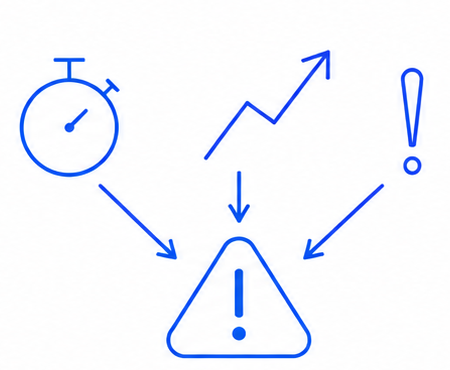
The tell is usually speed and size together: a trade entered within minutes of a loss closing, sized larger than normal, backed by a thinner rationale than you'd usually accept. Any one of those alone might mean nothing. All three stacked right after a loss is close to a guarantee.
Defeating it is a real milestone, not a footnote
Every trader who's become consistently profitable had to beat this one specifically. It compounds in a way most bad habits don't: the revenge trade is oversized and low-quality at the same time, so when it also loses, it costs more than the original loss it was meant to fix. That makes it one of the bigger leaks in a losing account, not a minor one.
Willpower doesn't help much here, because by the time you're already in the trade, the moment for a different decision has passed. What actually works is recognizing the pattern in your own numbers early enough to catch it before the next one starts.
The pattern CoTrader watches for
Trade by trade, this pattern is nearly impossible to see. Look back across a stretch of your own history and it becomes obvious. CoTrader's Callouts watch specifically for entries clustered within a short window of a loss and flag them, not as a lecture, just a fact from your own account: this happened, and here's what it cost.
Trying harder in the moment rarely beats revenge trading. Seeing the pattern ahead of time, before the moment even shows up, does.